
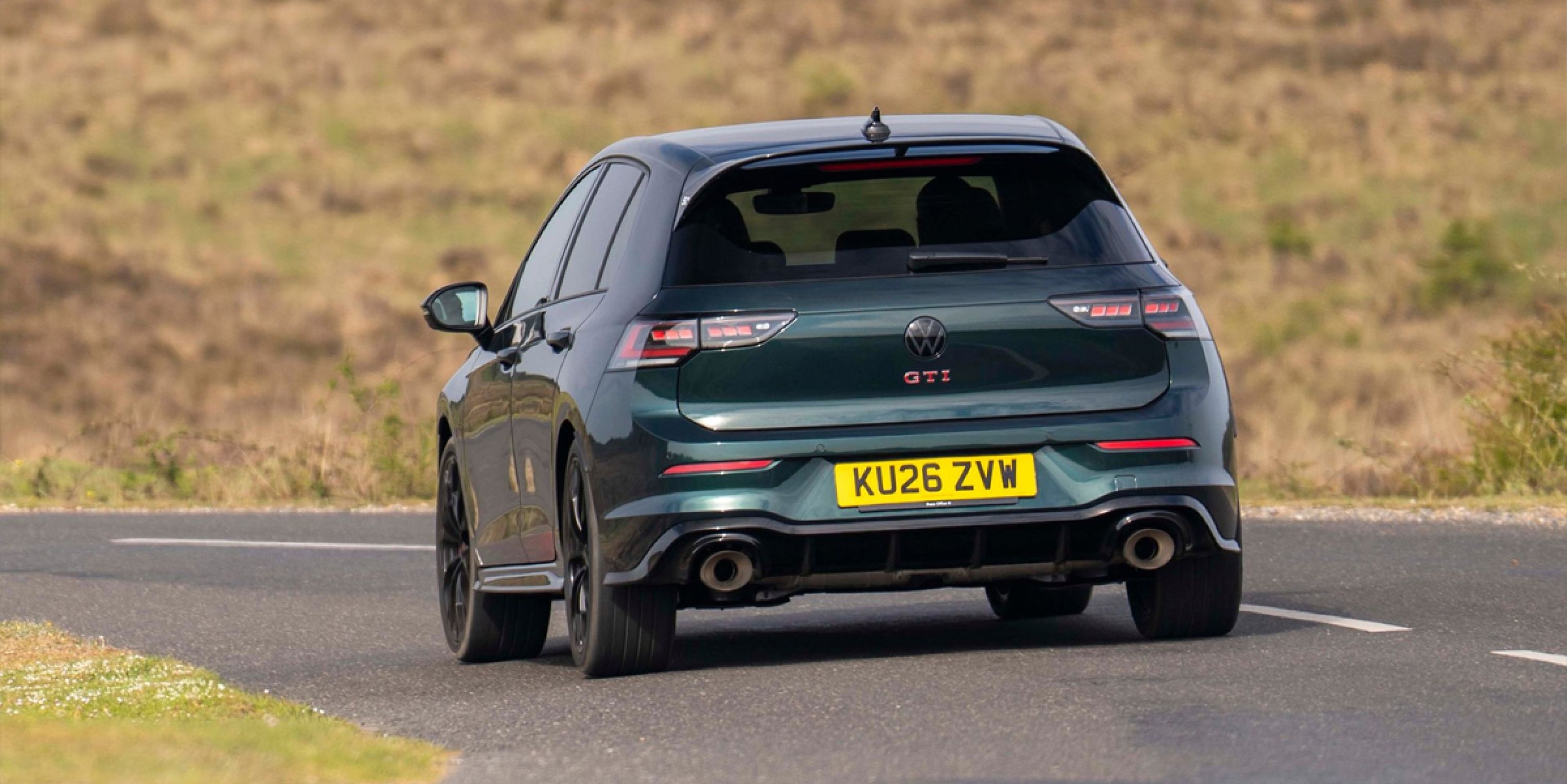

It's something we see every day but rarely stop to question. Across the globe, countries use a wide range of colours, fonts and designs on their vehicle registration plates.
In America, colours vary from state to state, with plates featuring white, blue, yellow, black and even green backgrounds. Australia also has a variety of designs, with different colours, styles and motifs depending on the state.
So, how did the UK end up with the familiar white and yellow plates we see on our roads today?
Why are number plates white and yellow in the UK?
In the UK, cars must display a white number plate with black characters at the front and a yellow number plate with black characters at the rear.
The main reason for using two different colours is to help people quickly distinguish which end of a vehicle they're looking at. This makes it easier to tell whether a car is facing towards you or travelling away.
Black characters on a white background offer the strongest contrast, so this is used at the front of a vehicle. Yellow also provides excellent contrast with black lettering, making it the next best choice for the rear.
There are a couple of other theories about the choice of colours, too.
One suggestion is that yellow was selected for the rear because a reflective white plate could potentially be confused with white light, which is generally not permitted at the rear of a vehicle.
Others believe Britain may have borrowed the colour combination from France. For many years, French cars also displayed yellow number plates at the rear and white ones at the front. However, France changed its system in 2009, adopting white plates at both ends of vehicles.
However, there’s no official evidence for either of these ideas.

When did the UK introduce yellow and white number plates?
The colour combination we recognise today became standard in 1973, when reflective number plates were introduced for vehicles manufactured from 1 January that year.
Before this change, most cars had traditional black number plates with white, silver or grey lettering. These were gradually replaced by reflective plates featuring black characters on a white background at the front and yellow at the rear.
The move to reflective materials made registration plates easier to see, particularly in poor light and at night when illuminated by other vehicles' headlights.
Although the design has remained largely unchanged for decades, there are still some older vehicles on UK roads displaying traditional black number plates.
Are black and white number plates still legal?
Yes, but only for qualifying older vehicles.
Cars manufactured before 1 January 1973 can display traditional black number plates with white, silver or grey characters. These are often seen on classic cars and vintage vehicles.
There is also an exception for certain vehicles manufactured before 1 January 1980. Since April 2020, these vehicles have been eligible to display traditional plates too, provided they are registered in the historic vehicle tax class and meet the relevant DVLA requirements.
So, if you spot an older car with black number plates, it's not necessarily breaking the rules. It could simply be retaining a traditional style that's still permitted.
What other number plate colours are allowed in the UK?
While white and yellow remain the standard colours, you might have noticed some vehicles displaying a small green section on their number plates.
These are known as green number plates and were introduced in December 2020 for eligible zero-emission vehicles. The green flash appears on the left-hand side of the plate and helps identify fully zero-emission vehicles, such as battery electric cars.
It doesn't replace the standard colours, though. The front plate remains white and the rear plate remains yellow.
Drivers can also display certain national flags and identifiers on the left-hand side of their plates, including the Union Flag, the St George's Cross, the Scottish Saltire and the Welsh dragon.

Are there rules about how number plates look?
Absolutely. UK number plates are subject to strict regulations to make sure they remain clear and easy to read.
Some of the main requirements include:
- Correct colours: Black characters on a white background at the front and a yellow background at the rear.
- Standard font: Number plates must use the approved Charles Wright typeface.
- Correct spacing: Letters and numbers must be arranged with specific sizes and spacing.
- Reflective material: Plates must be made from approved reflective material.
- No altered characters: You cannot use screws, stickers or other alterations to change the appearance of letters and numbers.
Since September 2021, newly fitted number plates must also meet the British Standard BS AU 145e. This sets out requirements covering things such as visibility, strength and reflectivity.
Getting it wrong can be costly. Incorrectly displayed number plates can result in a fine of up to £1,000, and your vehicle can fail its MOT.
Looking for a new car?
Whether you're looking for something practical for everyday driving, a family-friendly SUV or something with a little more performance, Jurni can help you find your next car.
We offer a wide range of new car leasing deals from some of the UK's leading manufacturers, with flexible options to suit different budgets and requirements.
Explore our latest car leasing deals at Jurni and find your next car.





.png)