

.jpg)

If you've driven the M25 around Surrey and the south of London, you'll probably know exactly the section of road we're talking about.
One minute you're cruising along the motorway. Then suddenly, your car starts droning, your tyres roar, and there's a rhythmic rumble that makes you wonder whether you've got a puncture.
But there's nothing wrong with your vehicle – the culprit is the road itself.
Parts of the M25 are surfaced with concrete rather than tarmac, and this is the cause of the distinctive noise and vibration thousands of drivers experience every day.
So why was the M25 built this way? Why does it make so much noise? And why can't it simply be covered with tarmac?
Here's everything you need to know.
Why is part of the M25 made from concrete?
The M25 isn't the only motorway in Britain with a concrete surface.
Around 400 miles of England's motorways and major A-roads are surfaced with concrete, much of it dating back several decades. Concrete was once considered an attractive choice for major roads because of its durability and ability to withstand heavy traffic.
Unlike tarmac, which generally needs more frequent resurfacing, concrete can remain in service for decades making it an afforable option.
That makes sense in theory. A well-designed and well-maintained concrete road can have a very long lifespan.
The problem is that the M25's concrete surface has now been exposed to decades of traffic, temperature changes and movement. Some of the features that made concrete attractive in the first place are also responsible for the loud driving experience today.
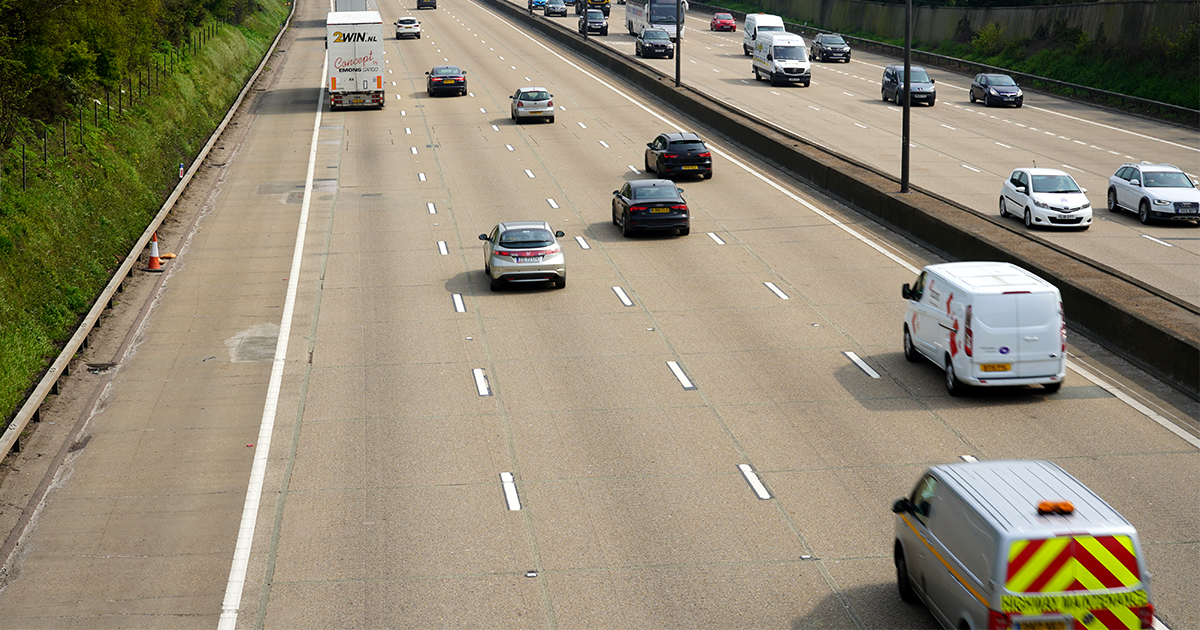
Why is the section of M25 so noisy?
The distinctive noise comes from two main things: the joints between the concrete slabs and the texture of the concrete surface itself.
Unlike tarmac, a concrete motorway is constructed in individual sections or slabs. Joints between those sections allow the concrete to expand and contract as temperatures change, helping prevent the road from cracking.
When those joints are in good condition, they don't cause much of a problem. But after decades of use, things can change.
As joints deteriorate and individual slabs move or become uneven, small differences in height can develop between sections of the road. Every time your tyres cross one of those joints, you get another little impact.
At motorway speeds, those impacts happen repeatedly, producing the familiar ba-dum, ba-dum, ba-dum underneath your car.
The concrete surface itself also contributes to the noise. Concrete is rigid and has a different surface texture from modern low-noise tarmac. As the surface gets worn by millions of passing vehicles, the resulting tyre noise gets even more noticeable.
Why don't they just resurface the M25 with tarmac?
If concrete is noisy, why not simply put a layer of smooth tarmac over the top?
The reality is more complicated.
A tarmac overlay can be used on an existing concrete road, but it isn't as simple as rolling a new surface over the top.
Concrete roads are made up of individual slabs that can move independently. If those movements aren't dealt with first, cracks can eventually appear in the asphalt above the joints.
That doesn't mean concrete roads can never be covered with asphalt. In fact, the M27 between junctions 5 and 7 has been given a low-noise asphalt overlay, following extensive repairs to the underlying concrete, including work on the joints and concrete bays.
But the condition and construction of the existing road matter.
For some sections, simply adding tarmac would only provide a shorter-term solution, with the potential for cracks and further maintenance as the concrete beneath continues to move. In other cases, a much more extensive reconstruction may be required.
Full-depth reconstruction effectively means rebuilding the road rather than simply putting a new surface on top. And doing that on one of Britain's busiest motorways would obviously be a substantial undertaking.
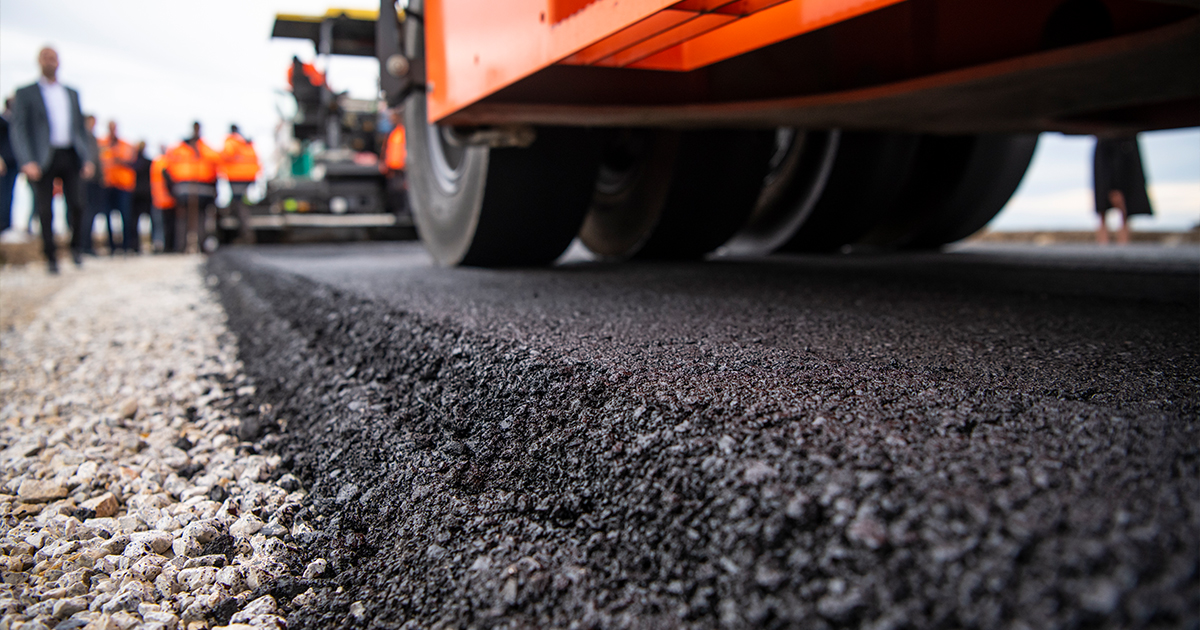
Could the M25's concrete surface be made quieter?
Potentially, yes. One technique that has been used to improve concrete roads is diamond grinding.
The process involves specialised machinery grinding the surface of the concrete to create a new texture. This can reduce tyre noise, improve skid resistance and help smooth out some surface irregularities.
The technique has been successfully trialled on UK roads, including concrete sections of the M1, A12 and A14.
However, the condition of the existing road matters. Diamond grinding isn't a magic solution for every concrete motorway, particularly roads with lots of individual slabs and worn joints.
That means the M25's roughest sections may require more extensive work than simply giving the surface a new texture.
What is being done about the M25?
The M25's concrete sections aren't being left completely untouched.
There has already been specific work to improve the condition of concrete sections of the M25, including joint replacement around junctions 9–11.
More recently, the Government confirmed that Next Generation Concrete Surfacing forms the second phase of treatment for concrete sections of the M25, with the aim of improving road condition and reducing noise.
This means the long-term future of the M25's concrete isn't simply a case of leaving it as it is.
Instead, different approaches are being considered, from repairing joints and treating existing surfaces to more substantial reconstruction where necessary.
Will the M25 ever be quiet?
Probably – but it's likely to take time.
The M25's concrete sections have been carrying traffic for decades, and fixing the worst areas isn't as simple as laying down a new layer of tarmac.
In the meantime, repairs, surface treatments and new techniques can help extend the life of existing concrete roads while reducing some of the noise and improving the driving experience.
So, the next time you find yourself on that particularly noisy section of the M25, you can at least take some comfort in knowing there's a reason for the rumble.
And no, your car isn't falling apart.
Looking for a new car?
Whether you're commuting around the M25, travelling long distances or simply looking for a more comfortable car for everyday driving, choosing the right vehicle can make a big difference.
At Jurni, we offer a wide range of car leasing deals to suit different needs and budgets. Explore our latest offers or get in touch with our team to find your next vehicle.





.png)